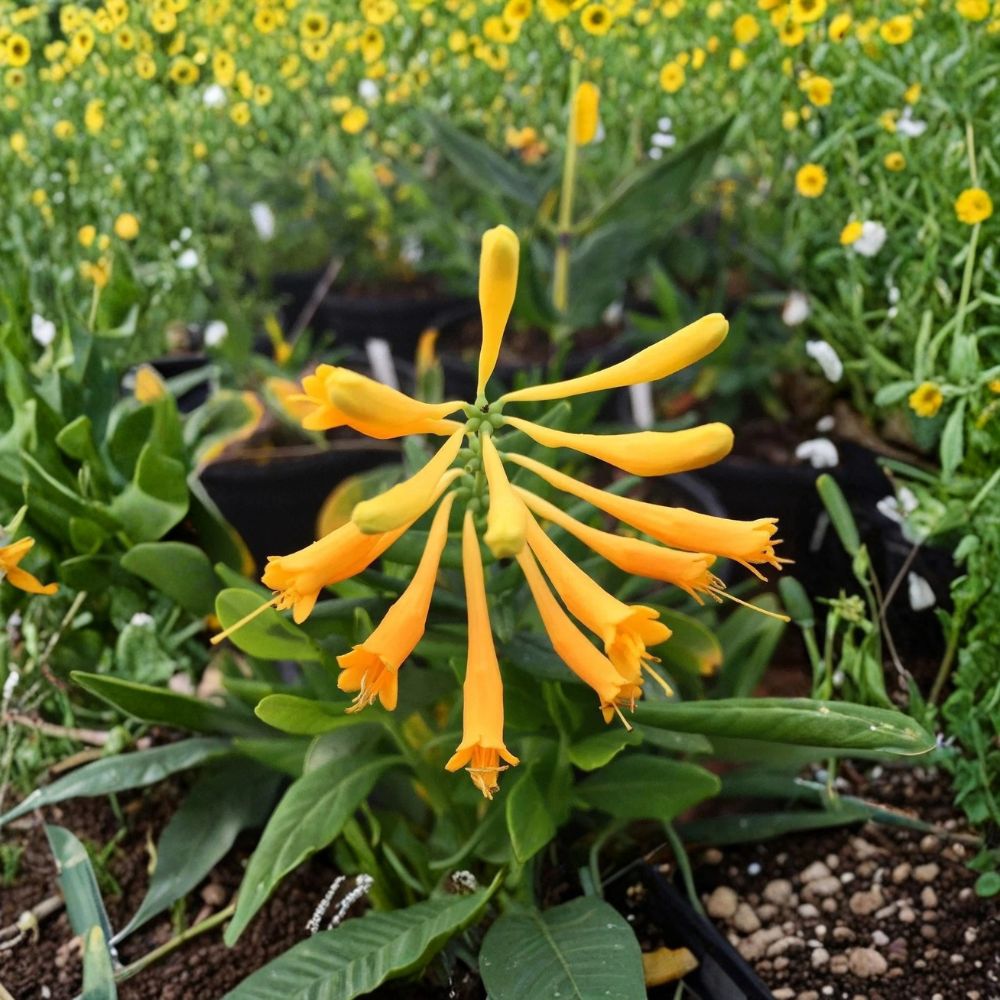
Yellow Honeysuckle Live Plant – Lonicera sempervirens 'Sulphurea'
Yellow Honeysuckle Live Plant – Lonicera sempervirens 'Sulphurea' | 1 Gallon | Native Flowering Vine | Hummingbird & Butterfly Plant

In stock
What you’ll receive
Growing details
Read product detailsCouldn't load pickup availability
Free U.S. shipping Processing: 3–7 business days · Transit: 5–15 weekdays
Free shipping within the United States. Orders are prepared in 3–7 business days. After dispatch, transit typically takes 5–15 weekdays. These are separate stages and estimates; weather and carrier delays can affect arrival.
Read shipping policyOrder issues & returns Report delivery issues within 48 hours
Report delivery issues within 48 hours with photos of the item, packaging, and label. Keep the item and packaging, and contact us before returning or refusing a parcel. Healthy, correctly supplied perishable items are generally final sale. See the refund policy for eligibility and exceptions.
Read refund policyGood to know
Product details
Review what is included, dimensions, and any care or usage instructions before ordering.
Back to buying optionsYellow Honeysuckle Live Plant – Lonicera sempervirens 'Sulphurea' | 1 Gallon | Native Flowering Vine | Hummingbird & Butterfly Plant
Add vibrant yellow flowers and wildlife-friendly beauty to your garden with this Yellow Honeysuckle, Lonicera sempervirens 'Sulphurea'. This fully rooted live plant comes in a standard 1-gallon nursery trade pot and is ready for transplanting into your landscape. This native honeysuckle produces beautiful blooms in late spring to early summer, followed by red berries in late summer that can attract birds. Its climbing growth makes it an excellent choice for trellises, fences, arbors, and naturalized garden spaces. The mature plant shown in the photos is for reference; the size of the plant you receive may vary depending on the season, weather, and availability.
You will receive:
✔️ 1 fully rooted Yellow Honeysuckle plant
✔️ Variety: Lonicera sempervirens 'Sulphurea'
✔️ Shipped in a standard 1-gallon nursery trade pot
✔️ Yellow late-spring to early-summer flowers
✔️ Red berries in late summer
✔️ Native, low-maintenance, and deer resistant
✔️ Attractive to hummingbirds, butterflies, and birds
🌼 Growing Information
Common Name: Yellow Honeysuckle
Botanical Name: Lonicera sempervirens 'Sulphurea'
Plant Type: Native flowering vine
Growth Stage: Fully rooted live plant
Sun Requirements: Full sun to morning sun with afternoon shade
Soil: Well-draining, moderately fertile soil
Watering: Moderate; keep evenly moist while establishing
Mature Height: Approximately 8–12 feet
Mature Width: Approximately 2–4 feet
Growth Rate: Moderate to fast
USDA Zones: 4–9
Container Friendly: Yes when young; best planted in the landscape with support
💡 Care Tip: Plant your Yellow Honeysuckle in well-draining soil and provide full sun or morning sun with afternoon shade. Water regularly while establishing, then reduce watering once the plant is well rooted. Provide a trellis, fence, arbor, or other support for the climbing stems. Light pruning after flowering can help maintain its shape and encourage healthy new growth.