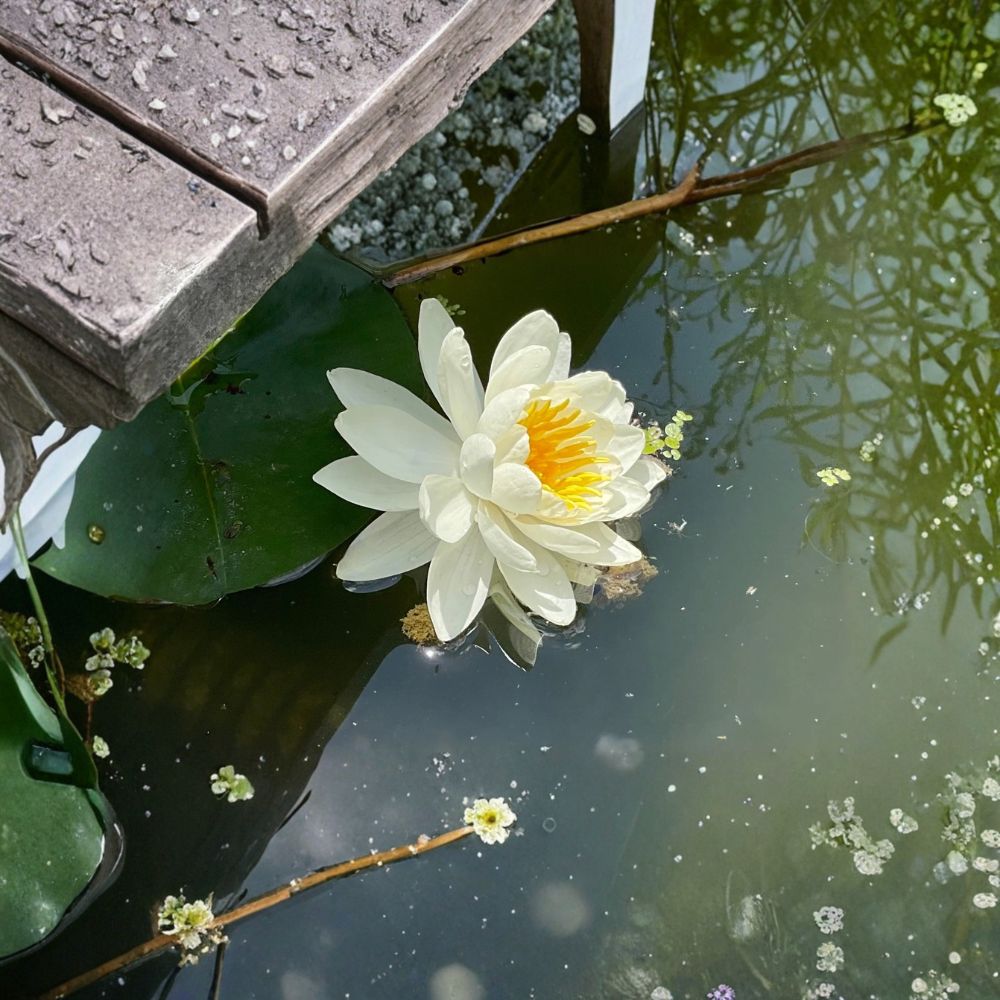
White Water Lily – Nymphaea Live Bare Root Tuber | 1–2 Inch Hardy Pond Plant | Aquatic Perennial | Easy to Grow
White Water Lily – Nymphaea Live Bare Root Tuber | 1–2 Inch Hardy Pond Plant | Aquatic Perennial | Easy to Grow
Couldn't load pickup availability
Create a beautiful, tranquil pond with this live White Water Lily (Nymphaea) bare root tuber, measuring approximately 1–2 inches with developing leaves. This hardy aquatic perennial is prized for its elegant white blooms and floating green lily pads that add natural beauty to ponds and water gardens. As the plant matures, it produces stunning flowers while helping provide shade and habitat for fish and other aquatic life.
This is a young starter tuber that may take one to two growing seasons to reach flowering size. Once established, White Water Lilies grow vigorously and naturally multiply, making them an excellent long-term addition to ponds and water features.
You will receive:
✔️ 1 live White Water Lily tuber
✔️ Tuber size: approximately 1–2 inches
✔️ Bare root with developing leaves
✔️ Hardy aquatic perennial
✔️ Secure packaging for safe arrival
🌼 Growing Information
Common Name: White Water Lily
Botanical Name: Nymphaea spp.
Plant Type: Hardy aquatic perennial
Growth Stage: Bare root tuber with developing leaves
Sun Requirements: Full sun (6+ hours daily preferred)
Soil: Heavy aquatic planting soil in an aquatic planting basket or container
Watering: Grown submerged in pond water
Mature Height: Leaves float on the water surface; flowers rise slightly above the water
Growth Rate: Moderate to fast once established
USDA Zones: 4–10 (hardy in ponds with adequate water depth)
Container Friendly: Yes, in aquatic planting baskets
💡 Care Tip: Plant the tuber in a wide aquatic container using heavy aquatic soil and place it 12–24 inches below the water surface. Position the container in full sun for the best growth and flowering. Young plants may require one or two seasons before producing their first blooms.
Share