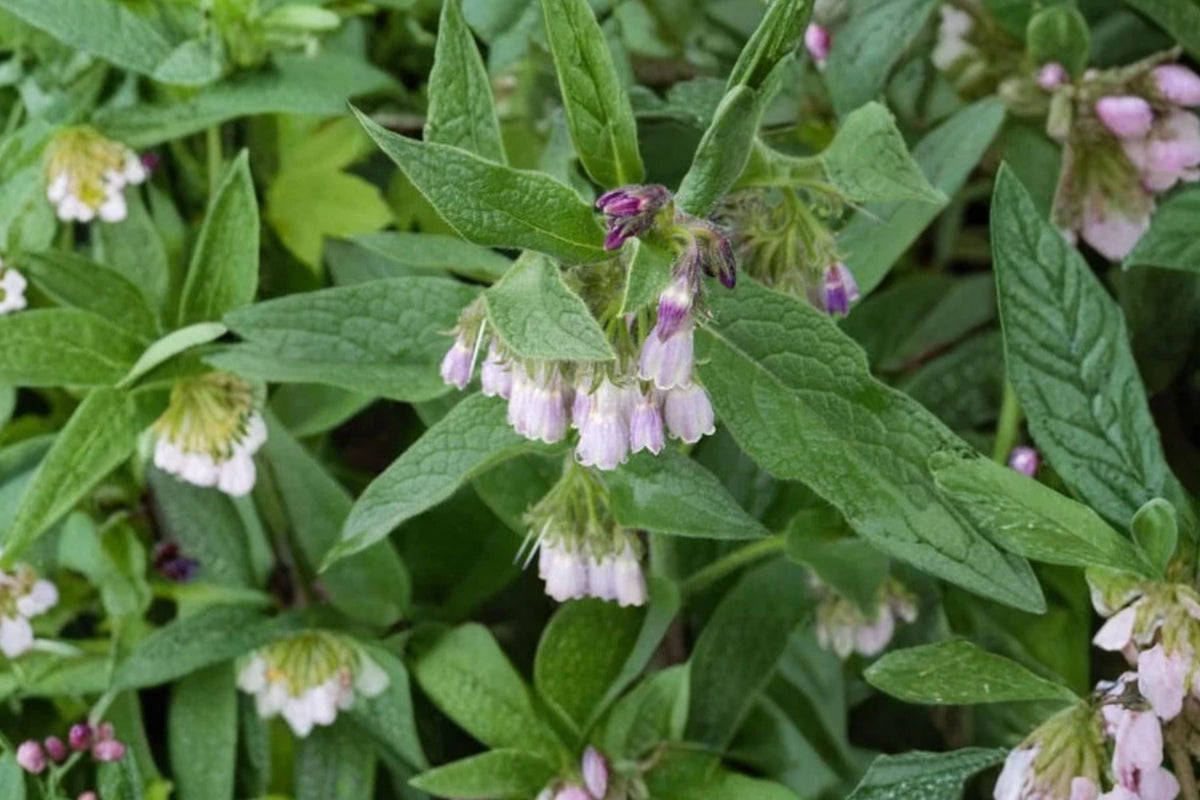
Russian Comfrey Bocking 14 – Live Crown Cutting, Easy-Growing Perennial Plant
Russian Comfrey Bocking 14 – Live Crown Cutting, Easy-Growing Perennial Plant

In stock
What you’ll receive
Growing details
Read product detailsCouldn't load pickup availability
Free U.S. shipping Processing: 3–7 business days · Transit: 5–15 weekdays
Free shipping within the United States. Orders are prepared in 3–7 business days. After dispatch, transit typically takes 5–15 weekdays. These are separate stages and estimates; weather and carrier delays can affect arrival.
Read shipping policyOrder issues & returns Report delivery issues within 48 hours
Report delivery issues within 48 hours with photos of the item, packaging, and label. Keep the item and packaging, and contact us before returning or refusing a parcel. Healthy, correctly supplied perishable items are generally final sale. See the refund policy for eligibility and exceptions.
Read refund policyGood to know
Product details
Review what is included, dimensions, and any care or usage instructions before ordering.
Back to buying optionsRussian Comfrey Bocking 14 – Live Crown Cutting, Easy-Growing Perennial Plant
Grow a productive and versatile perennial with this Russian Comfrey Bocking 14 crown cutting. Known for its vigorous growth and deep root system, Bocking 14 is a popular choice for organic gardeners looking to support soil fertility and create natural garden mulch. Its large leaves can be harvested for compost activation, homemade comfrey liquid fertilizer, and nutrient-rich mulch around established plants. This sterile cultivar spreads by crown growth rather than producing viable seeds, making it a practical option for dedicated garden beds. Plant in a permanent location, as comfrey can be difficult to remove once established.
You will receive:
-
✔️ 1 live Russian Comfrey Bocking 14 crown cutting
-
✔️ Crown cutting selected for planting and establishment
-
✔️ A perennial plant suitable for organic gardening
-
✔️ Ready-to-plant propagation material
🌼 Growing Information
-
Botanical Name: Symphytum × uplandicum ‘Bocking 14’
-
Common Name: Russian Comfrey
-
Plant Type: Herbaceous perennial
-
Cultivar: Bocking 14
-
Growth Habit: Fast-growing, clumping plant with large, hairy leaves
-
Mature Height: Approximately 3–4 feet
-
Sunlight: Full sun to partial shade
-
Soil Type: Fertile, well-draining soil
-
Watering: Keep consistently moist while establishing
-
Spacing: Approximately 2–3 feet apart
-
Hardiness: Generally suited to USDA zones 3–9
-
Growing Location: Outdoor garden beds and permaculture gardens
-
Uses: Compost activator, mulch, liquid plant fertilizer, and companion planting
-
Plant Form: 1 live crown cutting
💡 Care Tip
Choose a permanent planting location and prepare the soil before planting. Position the crown with its growing points just below the soil surface, then water well until established. Avoid harvesting during the first growing season so the plant can develop a strong root system. Wear gloves when handling the hairy leaves and stems, and remove crown and root fragments carefully if you ever need to control its spread.