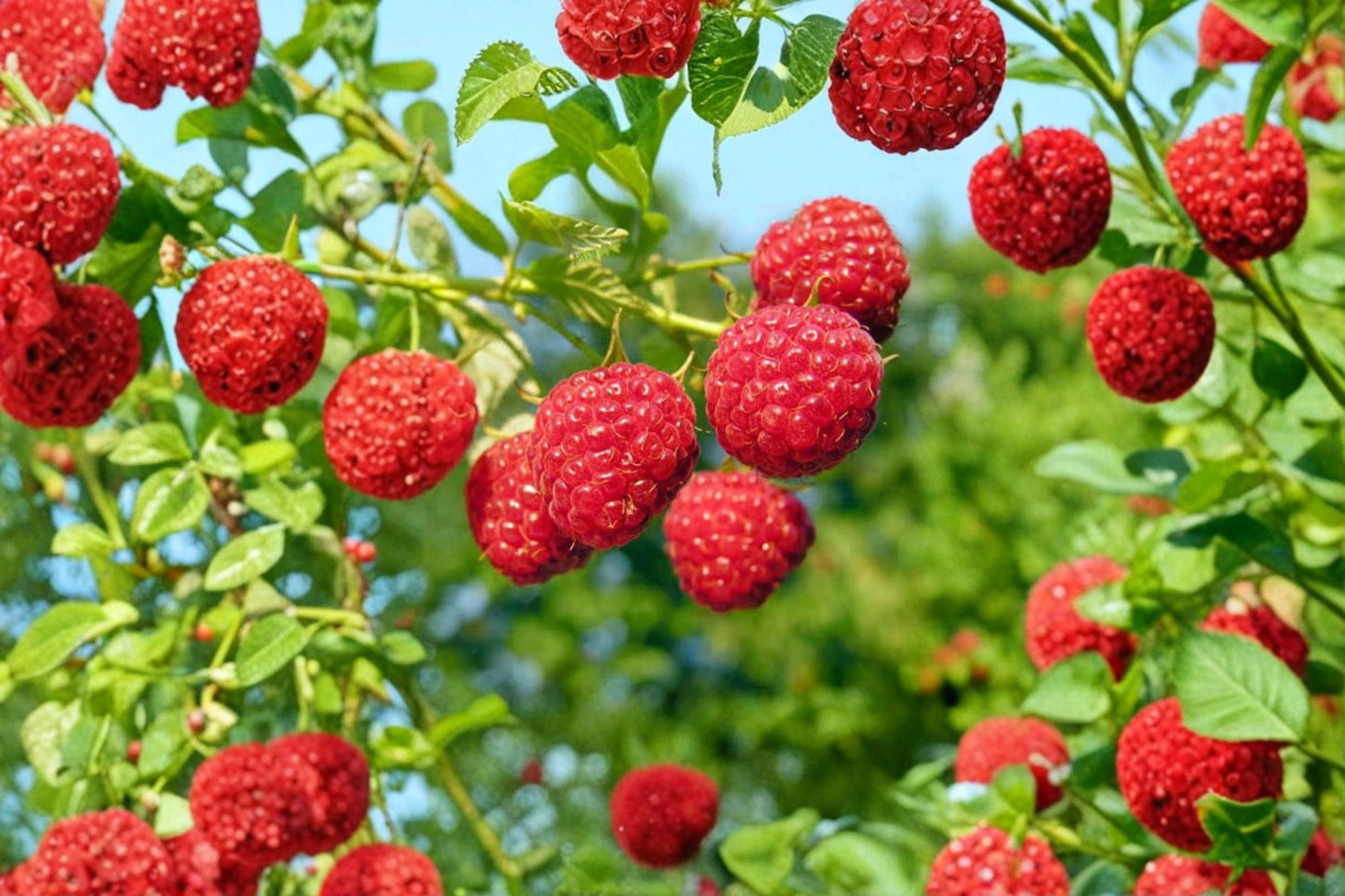
Rubus idaeus 'Willamette' | Willamette Red Raspberry Plant | Summer Bearing Berry Bush | Live Raspberry | 4.5" Pot
Rubus idaeus 'Willamette' | Willamette Red Raspberry Plant | Summer Bearing Berry Bush | Live Raspberry | 4.5" Pot
Couldn't load pickup availability
Rubus idaeus 'Willamette', commonly known as Willamette Raspberry, is one of the most reliable and productive summer-bearing raspberry varieties available. This vigorous red raspberry produces abundant crops of large, firm, deep red berries with exceptional sweet-tart flavor, making it a favorite for fresh eating, jams, pies, freezing, and preserving.
An early-season producer, 'Willamette' is prized for its consistent harvests, vigorous upright canes, and excellent cold hardiness. This classic raspberry performs beautifully in home gardens, edible landscapes, raised beds, and berry patches while providing years of dependable fruit production.
Easy to grow and highly productive, Willamette raspberries thrive in full sun with fertile, well-drained soil. The fragrant spring flowers attract bees and other beneficial pollinators before developing into delicious berries in early to mid-summer.
Key Features
- Botanical Name: Rubus idaeus 'Willamette'
- Common Name: Willamette Red Raspberry
- Life Cycle: Deciduous Fruiting Shrub
- Fruit Color: Deep Red
- Harvest Season: Early to Mid-Summer
- Growth Habit: Upright Canes
- Light Requirements: Full Sun
- Water Needs: Moderate; consistent moisture
- Hardiness Zones: USDA 4–8
- Characteristics: Summer-Bearing, High Yield, Cold Hardy, Pollinator Friendly, Excellent Flavor
Perfect For
- Home berry gardens
- Raised beds
- Edible landscaping
- Cottage gardens
- Backyard orchards
- Fresh eating
- Jams and preserves
- Freezing
- Baking
- Smoothies
Planting Partners
- Blueberries
- Strawberries
- Gooseberries
- Currants
- Elderberries
- Rhubarb
- Asparagus
- Companion herbs
Care Tips
Plant in fertile, well-drained soil with full sun exposure. Water consistently during flowering and fruit development. Install a trellis or wire support for easier harvesting and improved airflow. Prune spent floricanes immediately after harvest while leaving healthy primocanes for next year's crop. Apply mulch to conserve moisture and suppress weeds.
Share