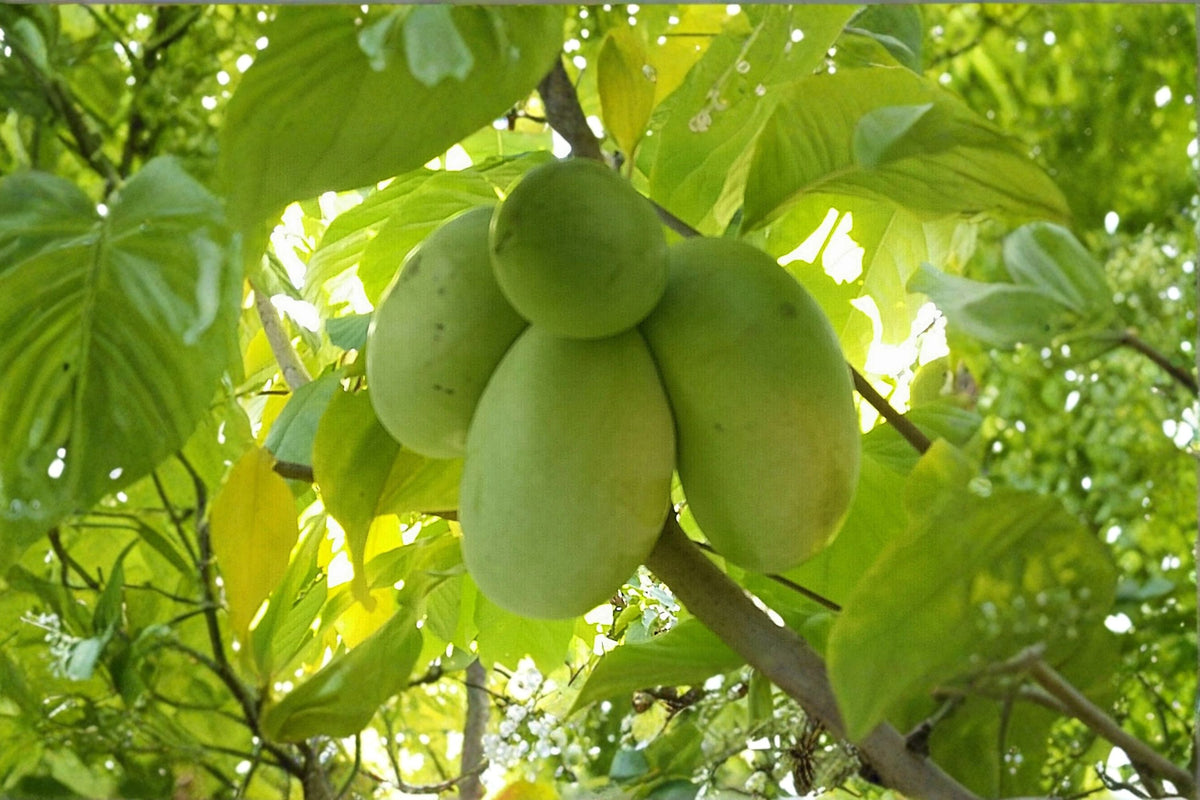
Paw Paw Indian Banana Tree – Asimina triloba Live Plant | 6–12 Inch Seedling | Quart Pot | Cold Hardy Edible Fruit Tree
Paw Paw Indian Banana Tree – Asimina triloba Live Plant | 6–12 Inch Seedling | Quart Pot | Cold Hardy Edible Fruit Tree
Couldn't load pickup availability
Bring a tropical look to a cold-hardy garden with this live Paw Paw Tree (Asimina triloba), also commonly known as Indian Banana. This distinctive North American fruit tree is valued for its large lush foliage, deep maroon spring flowers, golden-yellow fall color, and unusual edible fruit with soft, custard-like flesh and sweet tropical flavor. Each young seedling measures approximately 6–12 inches tall and arrives growing in a quart-sized nursery pot. Paw Paw makes an attractive addition to backyard orchards, edible landscapes, woodland gardens, and home fruit collections. Plants shipped during winter dormancy may naturally arrive leafless and will resume growth when favorable conditions return.
You will receive:
✔️ 1 live Paw Paw / Indian Banana Tree seedling
✔️ Height: approximately 6–12 inches
✔️ Growing in a quart-sized nursery pot
✔️ Healthy young cold-hardy fruit tree
✔️ Secure packaging for safe arrival
🌼 Growing Information
Common Name: Paw Paw, Indian Banana
Botanical Name: Asimina triloba
Plant Type: Deciduous edible fruit tree
Growth Stage: Young seedling
Sun Requirements: Partial shade when young; more sun as established
Soil: Moist, fertile, rich, well-draining soil
Watering: Moderate; maintain consistent moisture while establishing
Mature Height: Approximately 15–20 feet
Growth Habit: Upright, branching deciduous tree
Flower Color: Deep maroon
Bloom Season: Spring
Fruit: Edible custard-like fruit with sweet tropical flavor
Foliage: Green during the growing season, turning yellow in fall
USDA Zones: Approximately 5–8
Container Friendly: Yes when young; best given adequate growing space as it matures
💡 Care Tip: Keep your young Paw Paw consistently moist while it establishes and protect it from harsh afternoon sun and strong winds during its early growth stages. Gradually increase sunlight exposure as the tree becomes established. Paw Paw trees generally benefit from cross-pollination between genetically different trees, so growing more than one seedling can improve the potential for fruit production. Leaf drop and bare branches during winter dormancy are normal.
Share