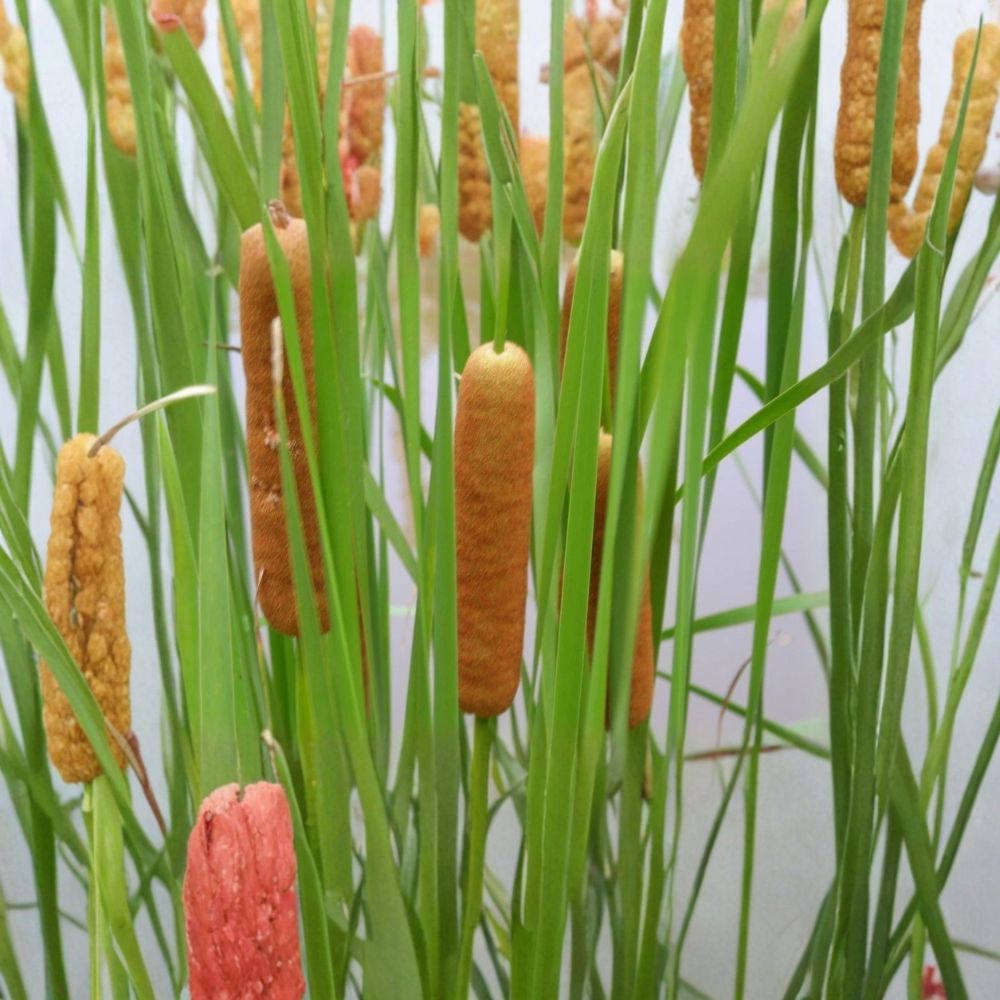
Live Cold Hardy Dwarf Cattail – Typha minima Aquatic Marginal Pond Plant | 14–20 Inches Tall | Includes Nursery Pot | Water Garden & Bog Plant | Easy to Grow
Live Cold Hardy Dwarf Cattail – Typha minima Aquatic Marginal Pond Plant | 14–20 Inches Tall | Includes Nursery Pot | Water Garden & Bog Plant | Easy to Grow
Couldn't load pickup availability
Enhance your pond or water garden with a Live Cold Hardy Dwarf Cattail, a compact aquatic plant prized for its slender green foliage and distinctive brown flower spikes. Growing just 12–24 inches tall, this hardy marginal plant is perfect for pond edges, bog gardens, container water gardens, and natural filtration areas. Dwarf cattails spread more slowly than standard varieties, making them easier to manage while still providing attractive texture and valuable habitat for wildlife. This listing is for one live potted plant measuring approximately 14–20 inches tall, ready to add beauty and function to your aquatic landscape. You will receive a healthy plant similar in size and condition to the one shown in the listing photos.
You will receive:
✔️ 1 live Cold Hardy Dwarf Cattail plant
✔️ Height: approximately 14–20 inches
✔️ Shipped in nursery pot
✔️ Healthy, rooted plant
✔️ Secure packaging for safe arrival
🌼 Growing Information
Common Name: Dwarf Cattail
Botanical Name: Typha minima
Plant Type: Aquatic marginal perennial
Growth Stage: Established live plant
Sun Requirements: Full sun to partial shade
Soil: Heavy loam or aquatic planting media
Watering: Grow in standing water or consistently saturated soil; maintain 1–5 inches of water above the roots
Mature Height: 12–24 inches
Mature Width: 2–4 inches (spreads gradually by rhizomes)
Growth Rate: Moderate to fast
Bloom Season: Late June through August
Bloom Color: Brown
USDA Zones: 3–12
Container Friendly: Yes
💡 Care Tip: Plant in an aquatic basket or container using heavy loam soil, and keep the crown in shallow water. If growing outside a pond, never allow the soil to dry out. Trim old foliage in late fall or early spring to encourage healthy new growth, and grow in containers if you want to limit spreading.
Share