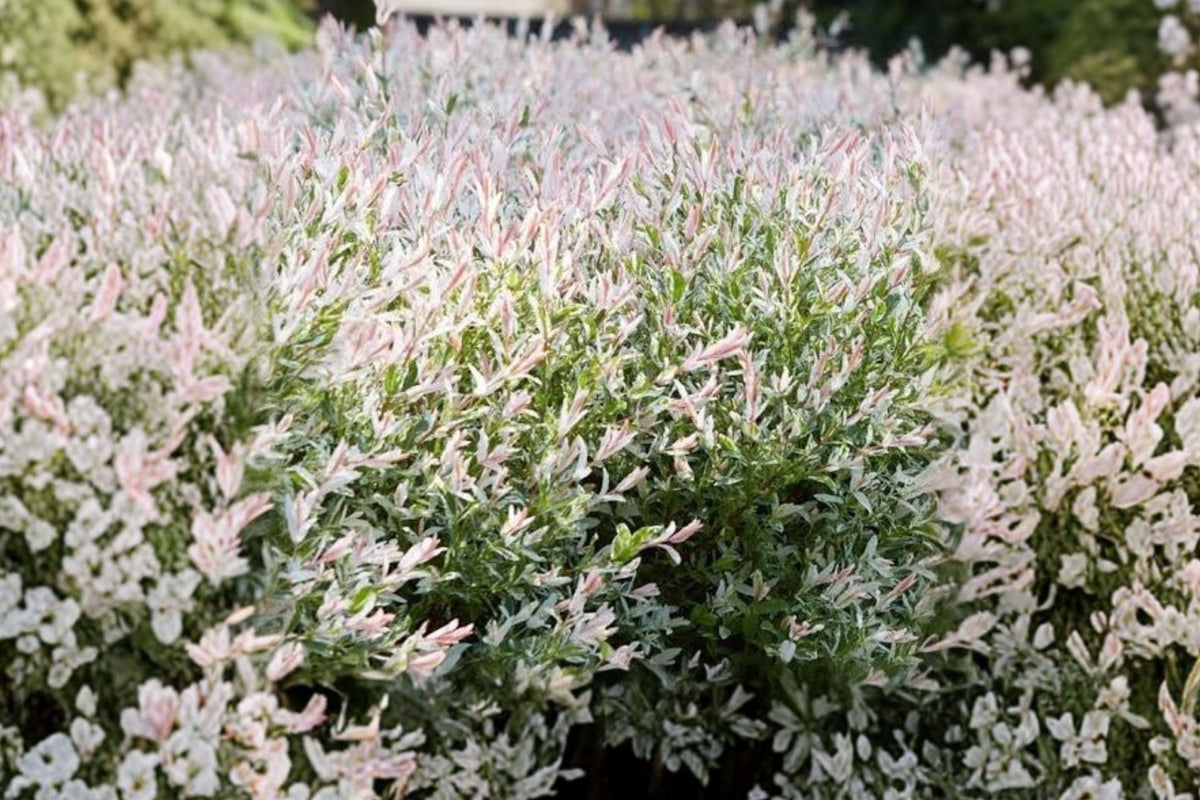
Japanese Dappled Nishiki Willow Live Plant – 8–12 Inch Tall | 4 Inch Pot Variegated Willow
Japanese Dappled Nishiki Willow Live Plant – 8–12 Inch Tall | 4 Inch Pot Variegated Willow
Couldn't load pickup availability
Add beautiful color and texture to your landscape with this live Japanese Dappled Nishiki Willow. Known for its eye-catching variegated foliage with green, creamy-white, and subtle pink tones, this deciduous willow makes an attractive specimen for garden beds, borders, and landscape accents. It can naturally develop as a multi-stemmed shrub or be selectively pruned into a small tree form. You will receive one healthy young Nishiki Willow approximately 8–12 inches tall growing in a 4-inch nursery pot. Plants purchased during the dormant season may arrive without leaves, which is a normal seasonal condition, with new foliage emerging when active growth resumes.
You will receive:
✔️ 1 live Japanese Dappled Nishiki Willow plant
✔️ Approximately 8–12 inches tall
✔️ Growing in a 4-inch nursery pot
✔️ Variegated foliage with attractive pink hues
✔️ Secure packaging for safe arrival
🌼 Growing Information
Common Name: Japanese Dappled Nishiki Willow
Botanical Name: Salix integra ‘Hakuro Nishiki’
Plant Type: Deciduous shrub or small ornamental tree
Growth Stage: Young potted plant
Sun Requirements: Full sun to partial shade
Soil: Adaptable to various soil types; prefers moist, well-draining soil
Watering: Regular; increase watering during hot and dry conditions
Mature Height: Approximately 8–10 feet if left unpruned
Growth Habit: Upright, branching, and multi-stemmed
Mature Width: Approximately 6 feet
Foliage: Narrow variegated leaves with green, white, and pink tones
Seasonal Habit: Deciduous; may arrive leafless during winter dormancy
Pruning: Responds well to pruning for size and shape control
Garden Use: Borders, specimen planting, shrub gardens, and landscape accents
USDA Zones: 4–9
Container Friendly: Yes, especially while young with regular pruning
💡 Care Tip: Plant your Nishiki Willow in a location receiving full sun to partial shade and provide consistent moisture, especially while the young plant establishes. Increase watering during periods of extreme heat and avoid allowing the root zone to remain completely dry for extended periods. Prune as needed to maintain a compact shrub or train the plant into a small tree form. If your willow arrives without leaves between fall and early spring, it may simply be dormant and should naturally produce new foliage as temperatures warm.
Share