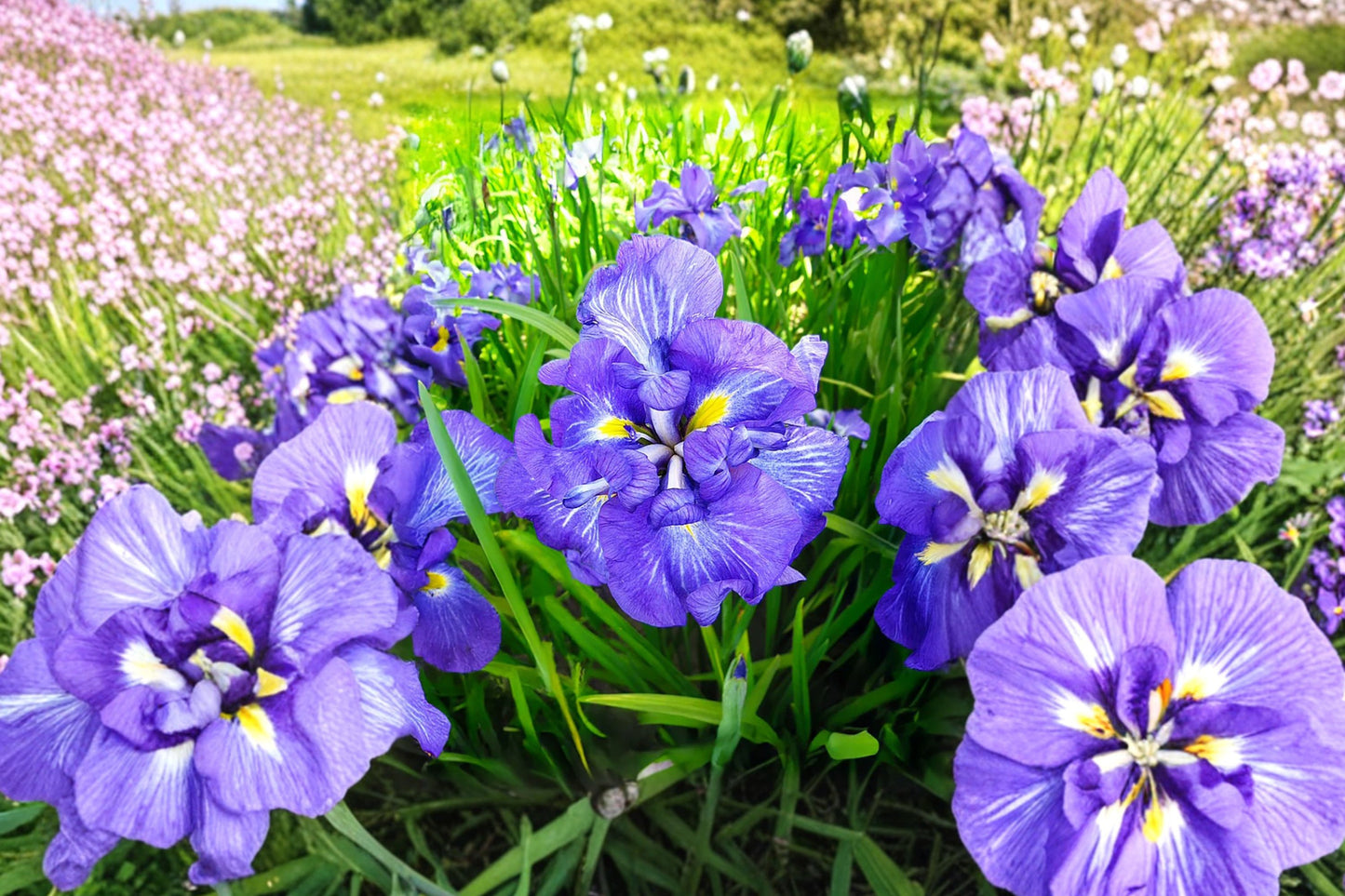
Iris ensata 'Electric Rays' | Japanese Water Iris | White & Purple Blooms | Bareroot Rhizome | Fall 2026 Pre-Order
Iris ensata 'Electric Rays' | Japanese Water Iris | White & Purple Blooms | Bareroot Rhizome | Fall 2026 Pre-Order
Couldn't load pickup availability
Create a spectacular display around ponds and water gardens with Iris ensata 'Electric Rays', an elegant Japanese Water Iris featuring large, ruffled white flowers accented with bold purple banding. Blooming in early to midsummer, its dramatic blossoms rise above graceful, upright green foliage, making this variety a standout in rain gardens, moist borders, and cutting gardens.
Unlike bearded irises, Japanese Iris thrives in consistently moist, fertile soil, making it ideal for pond edges, streams, bog gardens, and other damp landscape settings. Its impressive blooms also make exceptional cut flowers, while butterflies and other pollinators are drawn to its vibrant display.
Key Features
- Botanical Name: Iris ensata 'Electric Rays'
- Common Name: Japanese Water Iris
- Life Cycle: Herbaceous Perennial
- Plant Type: Rhizome
- Flower Color: White with Purple Bands
- Foliage Color: Green
- Bloom Season: Early to Mid Summer
- Mature Height: 30–36 inches
- Spread: 18–24 inches
- Growth Habit: Upright, Clumping
- Light Requirements: Full Sun to Partial Shade
- Water Needs: High; prefers consistently moist soil
- USDA Hardiness Zones: 4–9
- Characteristics: Moisture Loving, Pollinator Friendly, Excellent Cut Flower, Low Maintenance
Perfect For
- Pond edges
- Water gardens
- Rain gardens
- Bog gardens
- Moist perennial borders
- Cottage gardens
- Pollinator gardens
- Cut flower gardens
- Naturalized landscapes
Planting Partners
Pairs beautifully with:
- Hosta
- Astilbe
- Filipendula
- Carex
- Marsh Marigold
- Ligularia
- Lobelia cardinalis
- Primula japonica
Care Tips
Plant in rich, fertile soil that remains consistently moist. Japanese Iris performs best in full sun with abundant moisture during the growing season. Plant rhizomes about 1 inch deep and space 18–24 inches apart. Cut back foliage after frost and divide every 3–4 years to maintain vigorous flowering.
Share