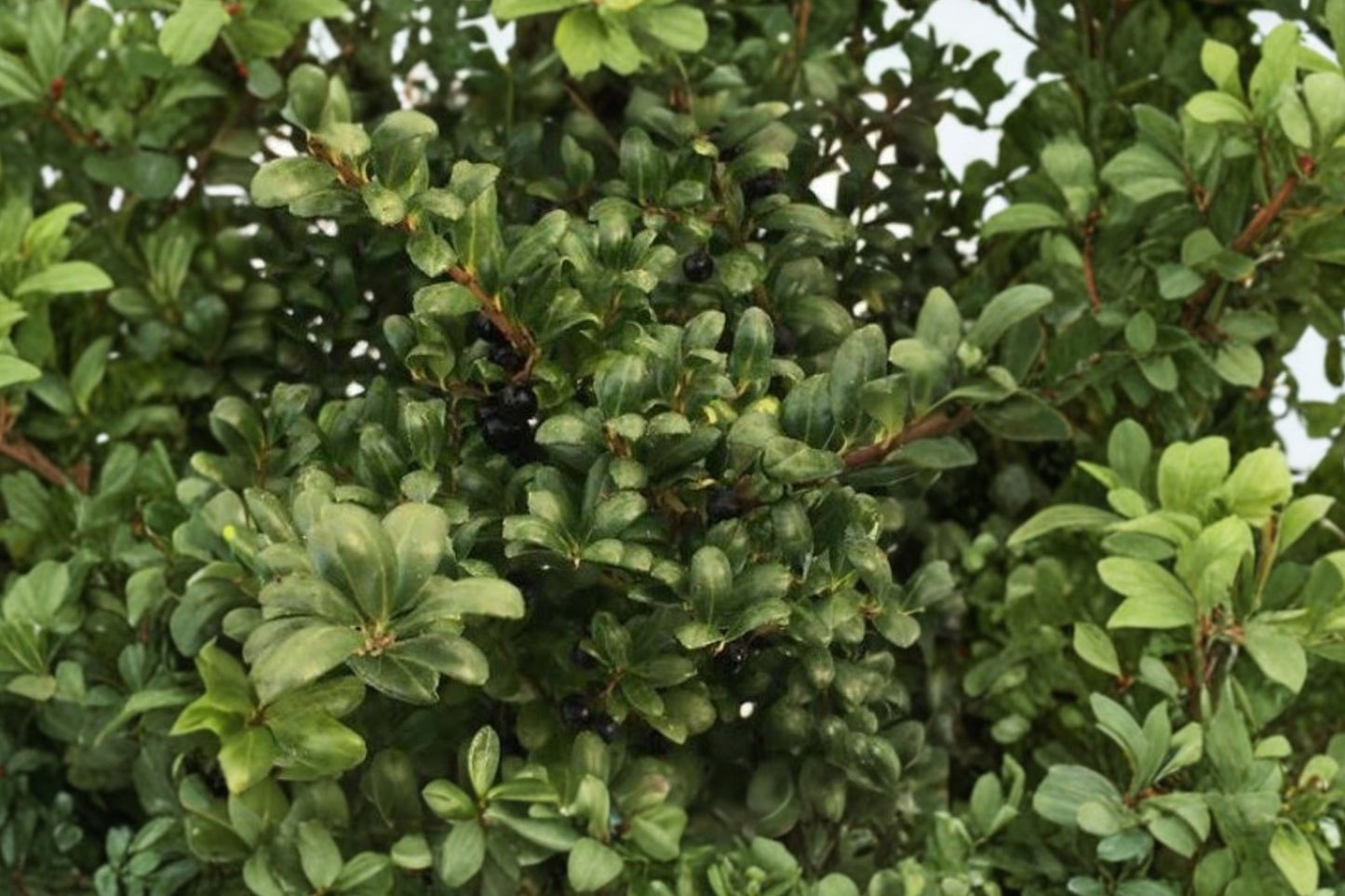
Ilex crenata 'Convexa' | Boxleaf Japanese Holly | Evergreen Hedge Shrub | 1 Gallon Live Plant
Ilex crenata 'Convexa' | Boxleaf Japanese Holly | Evergreen Hedge Shrub | 1 Gallon Live Plant
Couldn't load pickup availability
Ilex crenata 'Convexa', commonly known as Boxleaf Japanese Holly, is a dense, evergreen shrub prized for its glossy, dark green leaves and naturally rounded growth habit. Often used as a beautiful boxwood alternative, this versatile shrub is perfect for formal hedges, foundation plantings, topiary, bonsai, and low-maintenance landscapes.
Its small, convex-shaped leaves provide year-round texture and color, while tiny white flowers appear in late spring, followed by ornamental black berries on female plants when a male pollinator is nearby. Highly adaptable and easy to shape, 'Convexa' thrives in full sun to partial shade and tolerates pruning exceptionally well, making it a favorite for formal gardens and landscape borders.
Whether planted as a specimen, clipped hedge, or container accent, Ilex crenata 'Convexa' offers dependable evergreen beauty throughout every season.
Key Features
- Botanical Name: Ilex crenata 'Convexa'
- Common Name: Boxleaf Japanese Holly
- Life Cycle: Evergreen Shrub
- Foliage: Glossy Dark Green, Convex Leaves
- Flower Color: Small White
- Fruit: Black Berries (female plants with pollination)
- Height: 3–4 feet
- Spread: 3–4 feet
- Growth Rate: Slow to Moderate
- Growth Habit: Dense, Rounded
- Light Requirements: Full Sun to Partial Shade
- Water Needs: Moderate
- Hardiness Zones: USDA 5–8
- Characteristics: Evergreen, Deer Resistant, Drought Tolerant Once Established, Salt Tolerant, Easy to Prune
Perfect For
- Low hedges
- Foundation plantings
- Formal gardens
- Japanese gardens
- Topiary
- Bonsai
- Privacy borders
- Container gardens
Planting Partners
- Boxwood
- Azaleas
- Rhododendrons
- Hostas
- Ferns
- Hydrangeas
- Pieris japonica
- Ornamental grasses
Care Tips
Plant in fertile, well-drained, slightly acidic soil. Water regularly during establishment, then only during prolonged dry periods. Prune in late winter or early spring to maintain a formal shape. Apply mulch annually to conserve moisture and protect roots.
Share