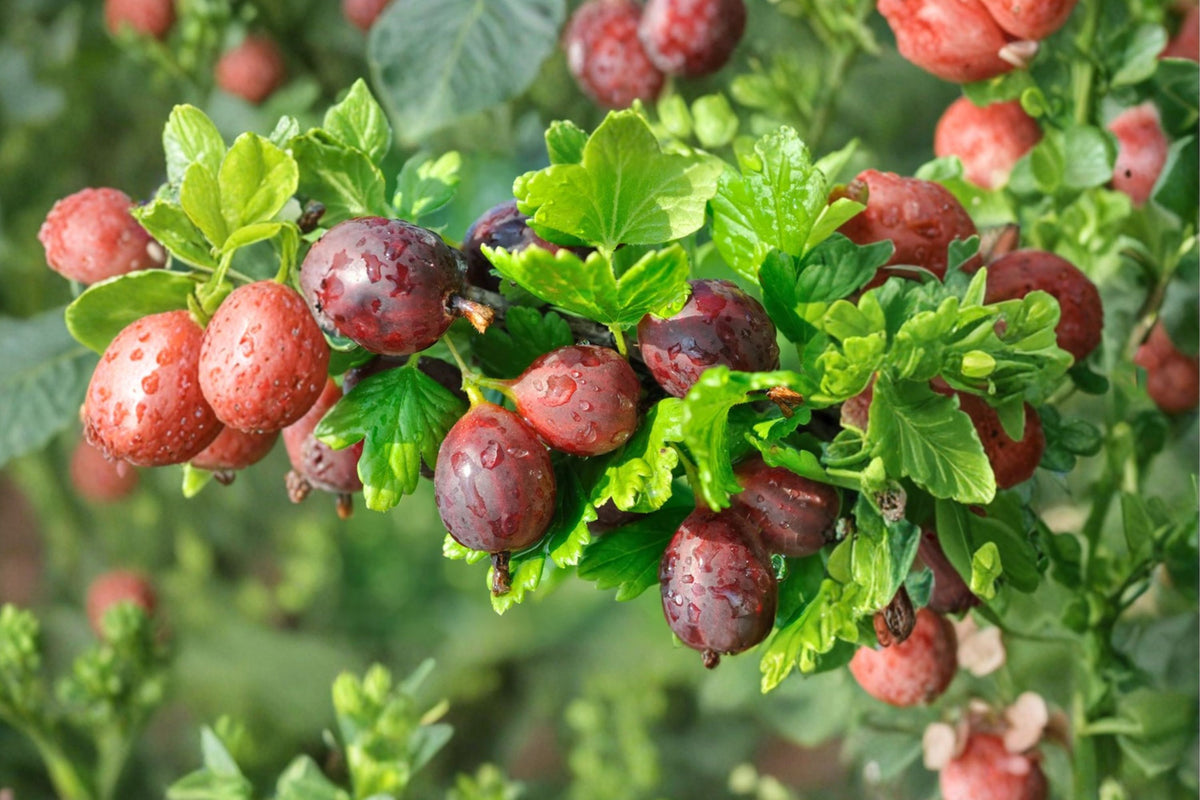
Hinnomaki Red Gooseberry Live Plant – 1 Gallon Rooted Edible Fruit Shrub Zones 3–7
Hinnomaki Red Gooseberry Live Plant – 1 Gallon Rooted Edible Fruit Shrub Zones 3–7
Couldn't load pickup availability
Add a productive berry shrub to your edible garden with this live Hinnomaki Red Gooseberry plant. This deciduous fruiting shrub is valued for its attractive foliage and flavorful red gooseberries that develop as the plant matures. Its manageable size makes it an excellent choice for home orchards, edible landscapes, berry gardens, and backyard plantings. Hinnomaki Red is well suited to cooler climates and can provide both ornamental interest and an edible harvest under suitable growing conditions. You will receive one healthy, rooted Hinnomaki Red Gooseberry plant in a 1-gallon size. Fruit production depends on plant maturity and growing conditions.
You will receive:
✔️ 1 live Hinnomaki Red Gooseberry plant
✔️ 1-gallon size
✔️ Healthy, established rooted shrub
✔️ Edible red-fruiting variety
✔️ Secure packaging for safe arrival
🌼 Growing Information
Common Name: Hinnomaki Red Gooseberry
Botanical Name: Ribes uva-crispa ‘Hinnomaki Red’
Plant Type: Deciduous edible fruit shrub
Growth Stage: Established rooted plant
Sun Requirements: Full sun to partial shade
Soil: Fertile, moisture-retentive, well-draining soil
Watering: Moderate; maintain consistent moisture without waterlogging
Mature Height: Approximately 3–5 feet
Growth Habit: Compact, upright to spreading shrub
Fruit Color: Red when ripe
Fruit: Edible gooseberries with a sweet-tart flavor
Fruiting Season: Typically summer
Growth Rate: Moderate
Garden Use: Berry gardens, home orchards, edible landscapes, and backyard gardens
USDA Zones: 3–7
Container Friendly: Yes, with a sufficiently large container
💡 Care Tip: Plant your Hinnomaki Red Gooseberry in fertile, well-draining soil and provide consistent moisture while it becomes established. Full sun generally supports good fruit production, while some afternoon shade can be helpful in warmer conditions. Mulch around the root zone to help retain moisture and keep roots cool, leaving a small gap around the base of the stems.
Share