Hemerocallis 'Ruby Stella' | Reblooming Red Daylily | Dwarf Perennial | Fall 2026 Bareroot Pre-Order
Hemerocallis 'Ruby Stella' | Reblooming Red Daylily | Dwarf Perennial | Fall 2026 Bareroot Pre-Order
Couldn't load pickup availability
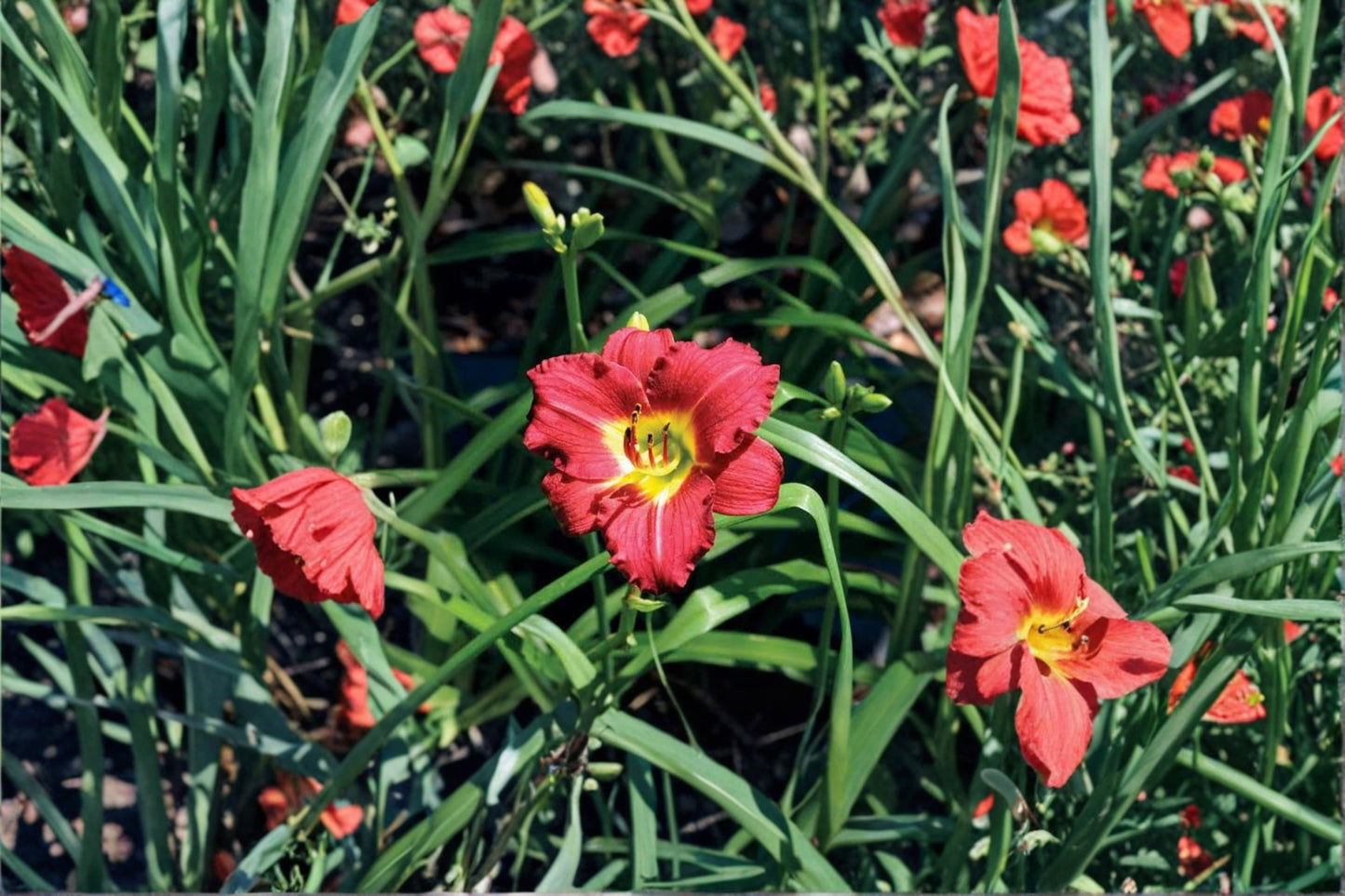
Add months of vibrant color to your landscape with Hemerocallis 'Ruby Stella', one of the most dependable reblooming dwarf daylilies available. This award-winning perennial produces an abundance of rich ruby-red flowers accented by bright golden-yellow throats from early summer through fall. Its compact size makes it perfect for borders, containers, cottage gardens, pollinator gardens, and mass plantings.
Easy to grow and exceptionally hardy, 'Ruby Stella' thrives in a wide range of climates and returns larger each year. The fragrant blooms attract butterflies, bees, and hummingbirds while remaining deer resistant once established. Whether planted individually or in drifts, this long-blooming daylily provides reliable color with very little maintenance.
Key Features
- Botanical Name: Hemerocallis 'Ruby Stella'
- Common Name: Ruby Stella Daylily
- Life Cycle: Herbaceous Perennial
- Flower Color: Ruby Red with Golden Yellow Throat
- Foliage Color: Green
- Bloom Season: Early Summer through Fall (Reblooming)
- Plant Height: 18–24 inches
- Spread: 18–24 inches
- Growth Habit: Compact, Clumping
- Light Requirements: Full Sun to Partial Shade
- Water Needs: Moderate
- Hardiness Zones: 3–9
- Characteristics: Reblooming, Fragrant, Deer Resistant, Pollinator Friendly, Low Maintenance
Perfect For
- Cottage gardens
- Perennial borders
- Pollinator gardens
- Foundation plantings
- Container gardens
- Walkway borders
- Mass plantings
- Cut flower gardens
- Small landscape spaces
Planting Partners
Pairs beautifully with:
- Salvia
- Lavender
- Coneflower (Echinacea)
- Black-Eyed Susan (Rudbeckia)
- Catmint (Nepeta)
- Shasta Daisy
- Russian Sage
- Coreopsis
- Ornamental Grasses
- Veronica
Care Tips
Plant in full sun for the most abundant blooms, though plants tolerate partial shade. Grow in well-drained soil and water regularly during establishment. Remove spent flowers to encourage continuous blooming throughout the season. Fertilize in spring with a balanced fertilizer and divide mature clumps every 3–5 years to maintain vigorous growth and flowering.
Share