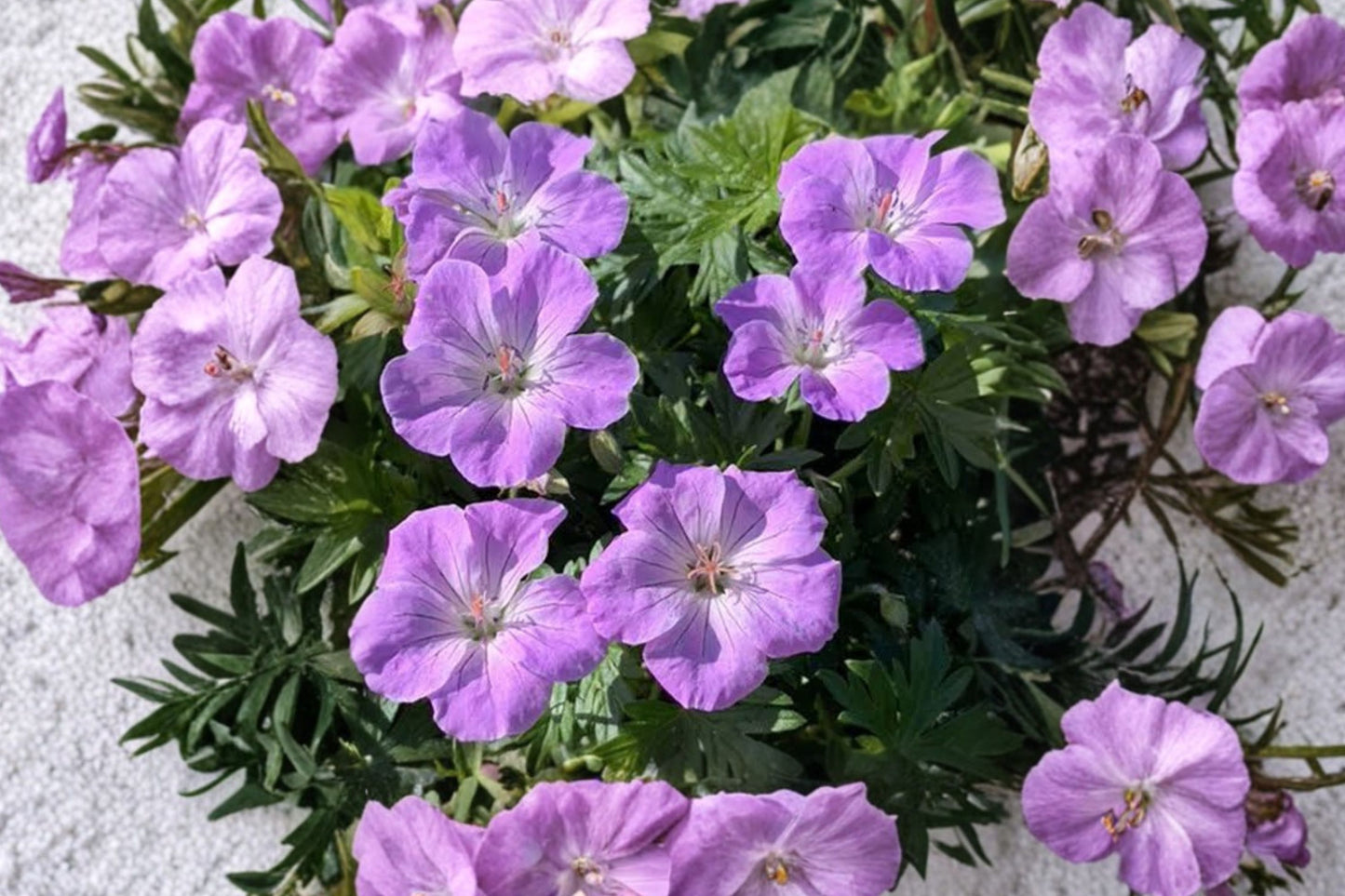
Geranium sanguineum | Bloody Cranesbill | Hardy Geranium | Pink Purple Perennial | Deer Resistant Groundcover | 1 Gallon Live Plant
Geranium sanguineum | Bloody Cranesbill | Hardy Geranium | Pink Purple Perennial | Deer Resistant Groundcover | 1 Gallon Live Plant
Couldn't load pickup availability
Brighten your garden with Geranium sanguineum, commonly known as Bloody Cranesbill, a hardy perennial celebrated for its vivid pinkish-purple blooms, compact mounding habit, and exceptionally long flowering season. Blooming from late spring through early fall, this easy-care geranium creates a colorful carpet of flowers that attracts bees and butterflies while naturally resisting deer.
Deeply divided green foliage forms a dense mound that makes an outstanding groundcover for borders, rock gardens, cottage gardens, and woodland edges. In autumn, the attractive foliage often develops brilliant shades of red, adding another season of interest to your landscape.
Reliable, drought tolerant once established, and adaptable to a wide range of garden conditions, Geranium sanguineum is an excellent choice for gardeners seeking months of vibrant color with minimal maintenance.
🌸 Key Features
- 💜 Bright pink-purple flowers
- 🌸 Blooms from late spring into fall
- 🌿 Dense mounding groundcover
- 🍂 Attractive red fall foliage
- 🐝 Pollinator friendly
- 🦌 Deer resistant
- ☀️ Easy to grow and low maintenance
- 💧 Drought tolerant once established
🌿 Plant Details
- Botanical Name: Geranium sanguineum
- Common Name: Bloody Cranesbill
- Plant Type: Herbaceous Perennial
- Foliage Color: Deep Green, Turning Red in Fall
- Flower Color: Pink to Purple
- Bloom Season: Late Spring through Early Fall
- Mature Height: 8–12 Inches
- Spread: 18–24 Inches
- Growth Habit: Compact, Mounding, Spreading
- Light Requirements: Full Sun to Partial Shade
- Water Needs: Moderate
- Soil: Well-drained soil
- Hardiness Zones: USDA 3–8
- Characteristics: Long Blooming, Pollinator Friendly, Deer Resistant, Drought Tolerant, Low Maintenance
🌼 Garden Uses
Ideal for:
- Cottage gardens
- Rock gardens
- Perennial borders
- Groundcover plantings
- Pollinator gardens
- Woodland edges
- Foundation beds
- Container gardens
- Filling spaces around spring bulbs
- Edging walkways
Its spreading habit naturally conceals fading spring bulb foliage while providing months of colorful blooms.
🌺 Companion Plants
Pairs beautifully with:
- Lavender
- Salvia
- Catmint (Nepeta)
- Coreopsis
- Dianthus
- Yarrow
- Echinacea
- Allium
- Ornamental Grasses
- Spring flowering bulbs
These combinations provide continuous seasonal color and excellent pollinator support.
🌱 Care Instructions
- Plant in well-drained soil.
- Grow in full sun for the best flowering, or provide light afternoon shade in warmer climates.
- Water regularly during establishment.
- Once established, water only during extended dry periods.
- Deadhead lightly to encourage continued blooming.
- Trim plants back after the first heavy bloom for fresh foliage and additional flowers.
- Divide every few years to maintain vigor.
Share