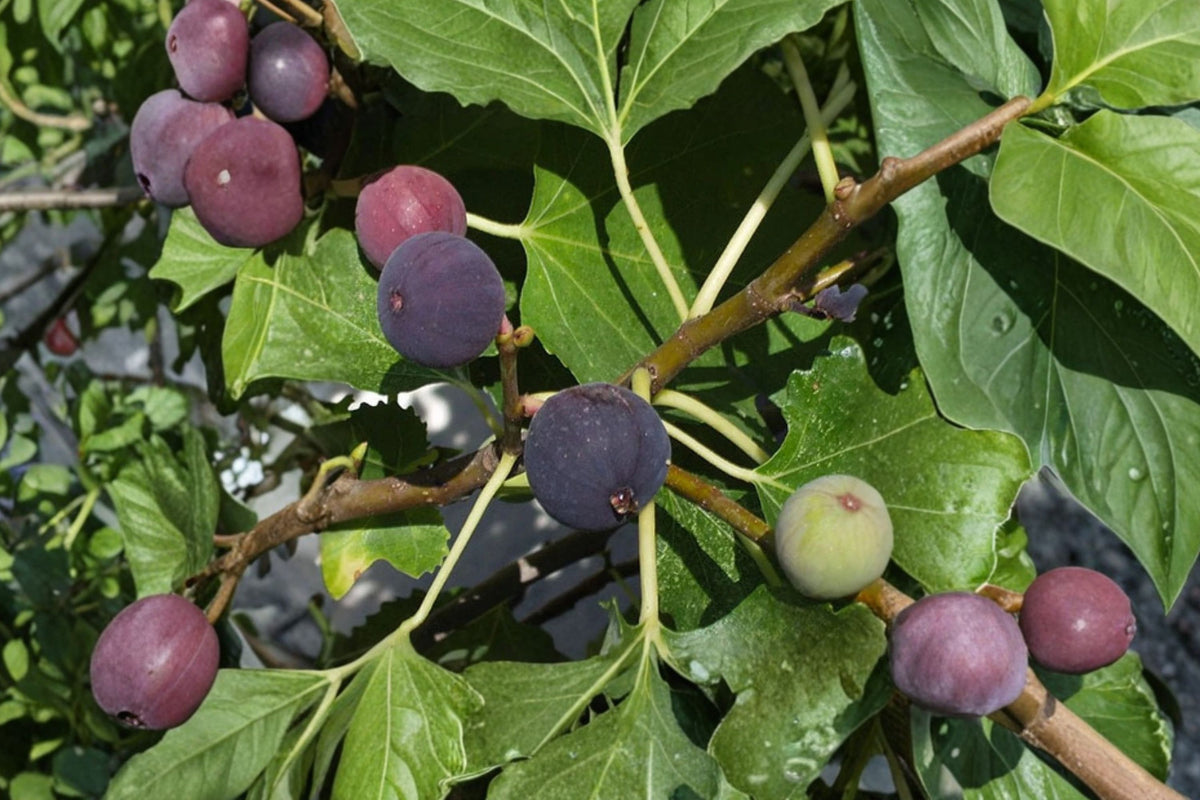
Chicago Hardy Fig Tree – Ficus carica Live Fruit Tree | 3 Gallon Pot | Approximately 36 Inches Tall | Cold Hardy Fig | Container & Garden Friendly
Chicago Hardy Fig Tree – Ficus carica Live Fruit Tree | 3 Gallon Pot | Approximately 36 Inches Tall | Cold Hardy Fig | Container & Garden Friendly
Couldn't load pickup availability
Grow delicious homegrown figs with this live Chicago Hardy Fig Tree (Ficus carica), supplied in a 3-gallon nursery pot and approximately 36 inches tall at shipment. This popular deciduous fruit tree is known for producing sweet figs with attractive pink flesh while offering beautiful green foliage throughout the growing season. Chicago Hardy is especially valued for its cold tolerance and ability to return with vigorous growth after winter conditions. It can be grown directly in the garden or maintained in a large container, making it a versatile choice for patios, backyard orchards, and edible landscapes. Depending on the season, plants shipped from fall through early spring may arrive dormant with little or no foliage.
You will receive:
✔️ 1 live Chicago Hardy Fig Tree
✔️ Height: approximately 36 inches
✔️ Shipped in a 3-gallon nursery pot
✔️ Healthy, established fruit tree
✔️ Secure packaging for safe arrival
🌼 Growing Information
Common Name: Chicago Hardy Fig
Botanical Name: Ficus carica ‘Chicago Hardy’
Plant Type: Deciduous fruit tree
Growth Stage: Established young tree
Sun Requirements: Full sun
Soil: Fertile, well-draining soil
Watering: Moderate; water when the top 2 inches of soil begin to dry
Mature Height: Approximately 10–15 feet
Growth Rate: Moderate
Fruit: Sweet figs with pink flesh, typically ripening in late summer
USDA Zones: 6–10
Container Friendly: Yes
💡 Care Tip: After arrival, place your Chicago Hardy Fig in a sunny location with well-draining soil and water regularly while it becomes established. Avoid keeping the soil constantly saturated. If your tree arrives during fall, winter, or early spring with few or no leaves, it may simply be in its natural dormant stage and should begin producing new growth as temperatures warm.
Share