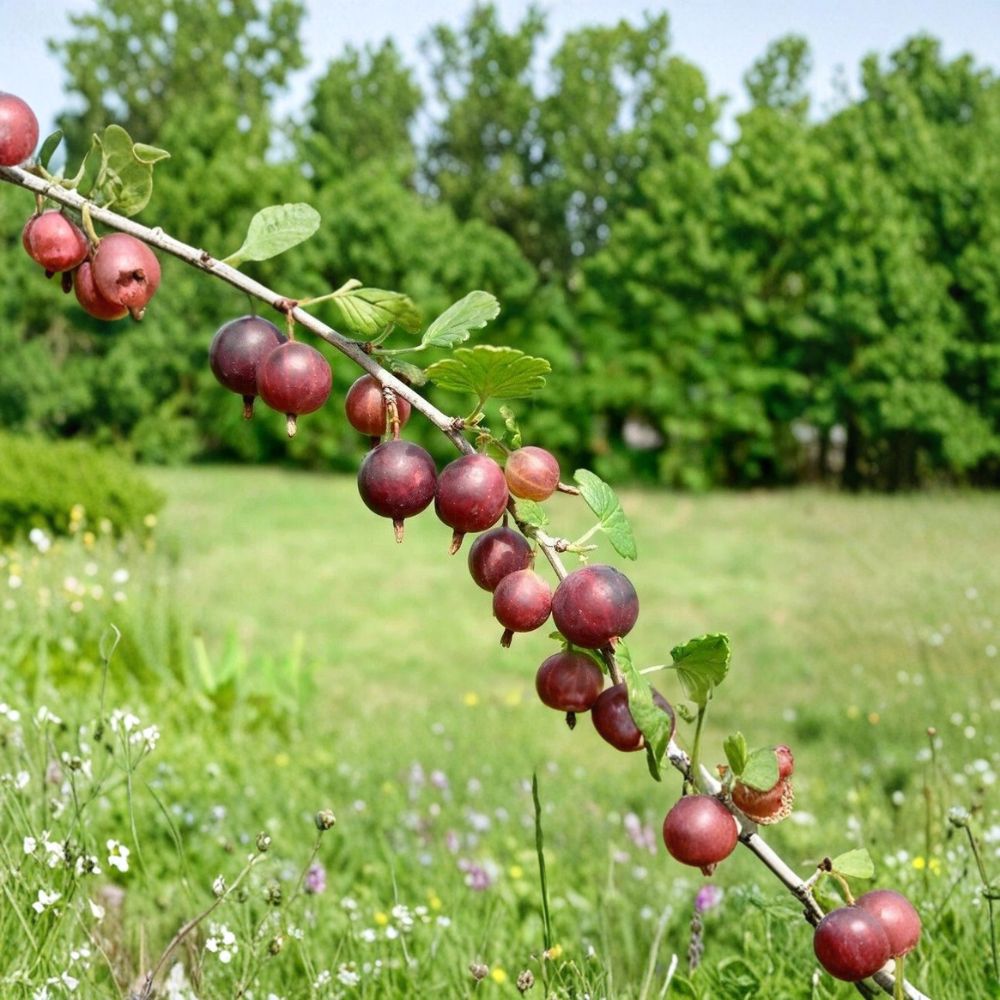
Captivator Gooseberry Live Plant – Rooted Starter Shrub | Fruit Bearing Bush | Includes Rooted Plant | Cold Hardy | Easy to Grow
Captivator Gooseberry Live Plant – Rooted Starter Shrub | Fruit Bearing Bush | Includes Rooted Plant | Cold Hardy | Easy to Grow
Couldn't load pickup availability
Grow your own delicious gooseberries with this Captivator Gooseberry live rooted starter plant. This hardy fruiting shrub produces large, sweet-tart berries that ripen from pink to deep reddish-purple in late summer, making them perfect for fresh eating, baking, jams, juices, and other homemade treats. Captivator is a self-pollinating variety, so only one plant is needed to produce fruit. This cold-hardy shrub is an excellent addition to edible landscapes, backyard orchards, or container gardens. The plant you receive is a healthy rooted starter taken from a fruiting shrub and shipped carefully packaged for safe arrival. You will receive a plant similar in size and health to the one shown in the listing photos.
You will receive:
✔️ 1 live rooted Captivator Gooseberry plant
✔️ Rooted starter plant from a fruiting shrub
✔️ Shipped with roots carefully protected for transit
✔️ Healthy, established plant
✔️ Secure packaging for safe arrival
🌼 Growing Information
Common Name: Captivator Gooseberry
Botanical Name: Ribes uva-crispa 'Captivator'
Plant Type: Deciduous fruiting shrub
Growth Stage: Rooted starter plant
Sun Requirements: Full sun to partial shade
Soil: Well-draining, fertile soil rich in organic matter
Watering: Moderate; keep soil consistently moist but not waterlogged
Mature Height: 3–6 feet
Growth Rate: Moderate
USDA Zones: 3–8
Container Friendly: Yes
💡 Care Tip: Plant in well-draining soil and water regularly while the shrub establishes. Captivator Gooseberry may naturally shed leaves during a semi-dormant period in mid to late summer before producing fresh foliage again in the fall. This is a normal growth cycle and not a sign of poor plant health.
Share