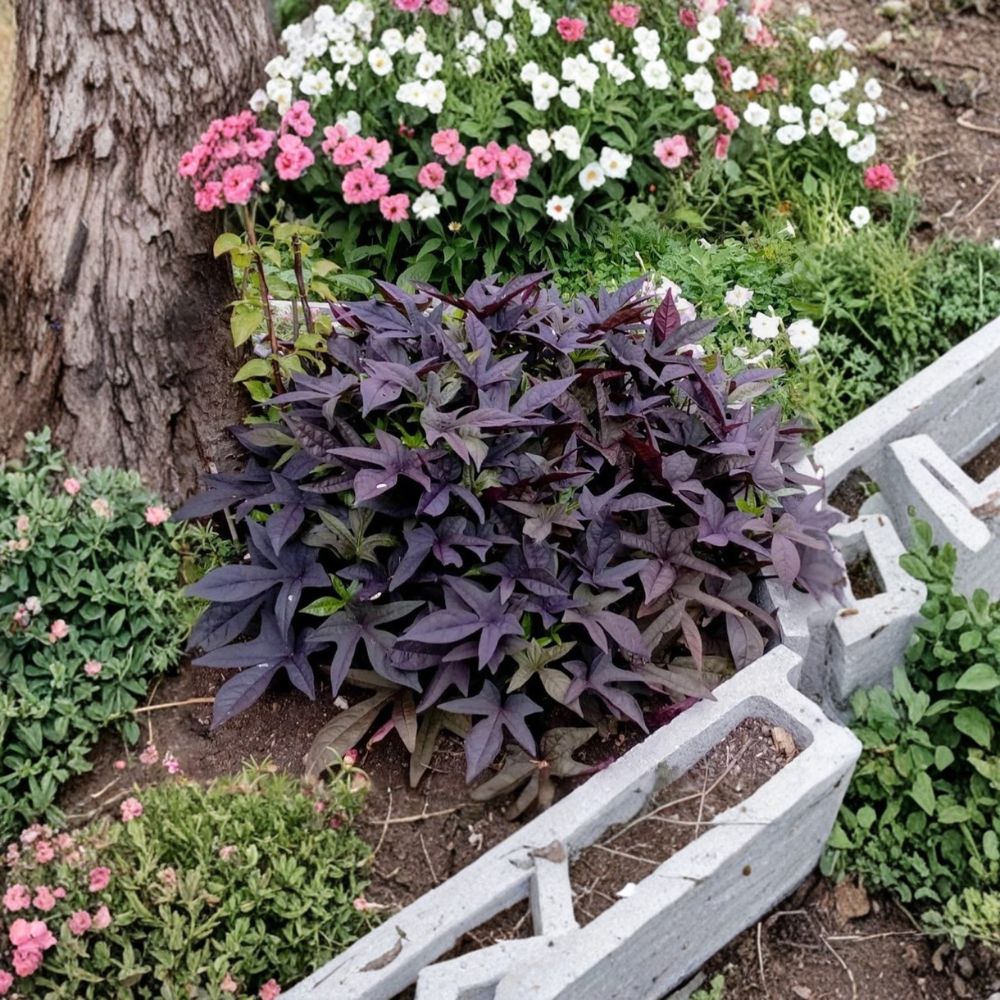
Blackie Sweet Potato Vine – Ipomoea batatas 'Blackie' Live Starter Plants | Set of 2 | 4–6 Inches Tall | Ships Without Pot
Blackie Sweet Potato Vine – Ipomoea batatas 'Blackie' Live Starter Plants | Set of 2 | 4–6 Inches Tall | Ships Without Pot
Couldn't load pickup availability
Add dramatic color to your garden with this set of 2 live Blackie Sweet Potato Vine starter plants. Each healthy young plant measures approximately 4–6 inches tall and ships without a nursery pot, with the root ball carefully wrapped to maintain moisture during transit. Grown for its striking deep purple-black foliage, Ipomoea batatas 'Blackie' is a fast-growing ornamental vine that quickly develops into a lush cascading display. Perfect for hanging baskets, patio containers, borders, and ground cover, this vigorous plant creates bold contrast in any landscape. You will receive healthy live starter plants similar in size and condition to those shown in the listing photos.
You will receive:
✔️ 2 live Blackie Sweet Potato Vine starter plants
✔️ Height: approximately 4–6 inches each
✔️ Shipped with protected root balls (no nursery pots)
✔️ Healthy, rooted plants
✔️ Secure packaging for safe arrival
🌼 Growing Information
Common Name: Blackie Sweet Potato Vine
Botanical Name: Ipomoea batatas 'Blackie'
Plant Type: Ornamental perennial vine (commonly grown as an annual in cooler climates)
Growth Stage: Starter plants
Sun Requirements: Full sun to partial shade
Soil: Fertile, well-draining soil
Watering: Moderate; keep soil evenly moist while establishing
Mature Height: 6–12 inches
Mature Spread: 3–10 feet
Growth Rate: Fast
USDA Zones: 9–11
Container Friendly: Yes
💡 Care Tip: Plant in a sunny location for the deepest foliage color and fastest growth. Water consistently while the plants establish, then trim occasionally to encourage fuller branching. This vigorous vine is ideal for spilling over containers, hanging baskets, and landscape borders. In colder climates, growth may slow or die back after frost.
Share