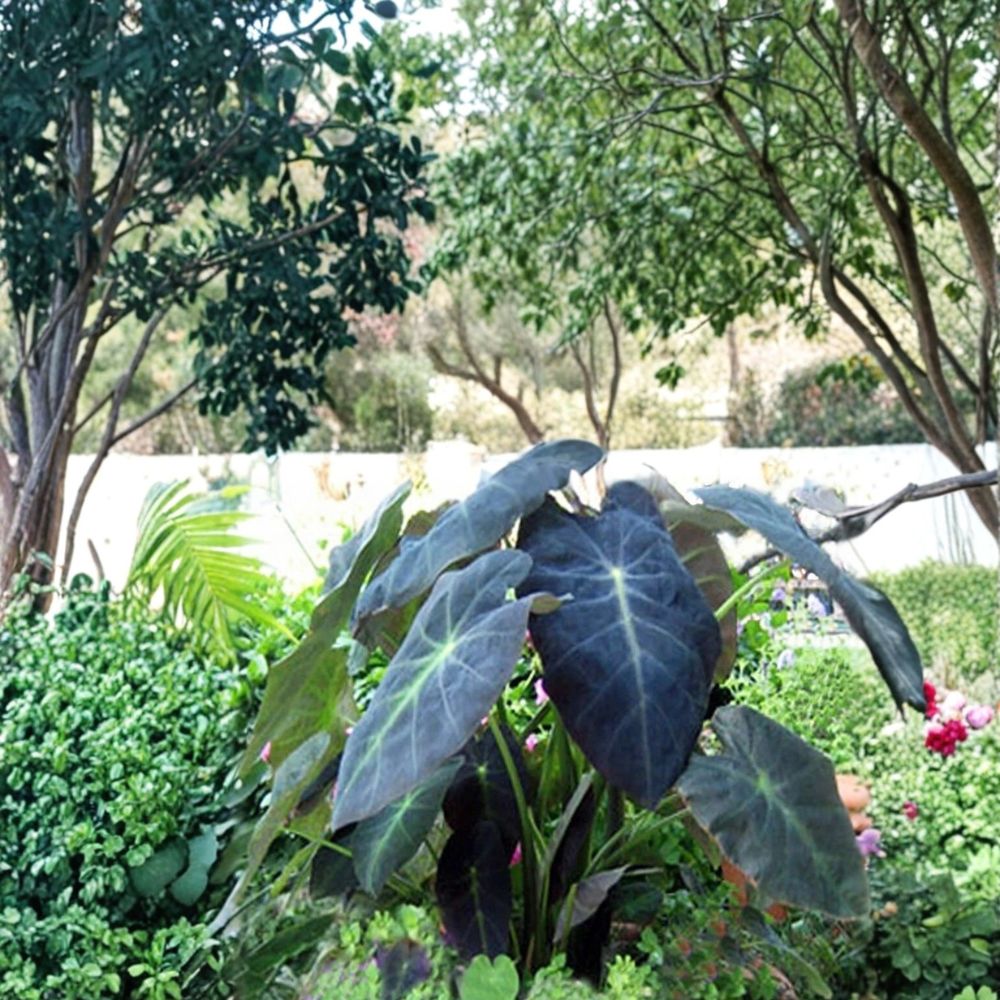
Black Beauty Elephant Ear – Colocasia antiquorum Live Plant | 3–8 Inches Tall | Includes Nursery Pot | Tropical Foliage Plant | Easy to Grow
Black Beauty Elephant Ear – Colocasia antiquorum Live Plant | 3–8 Inches Tall | Includes Nursery Pot | Tropical Foliage Plant | Easy to Grow
Couldn't load pickup availability
Make a bold statement in your garden or patio with the stunning Black Beauty Elephant Ear. This compact tropical plant is prized for its dramatic puckered, deep purple to nearly black leaves and striking dark stems, creating an eye-catching focal point in landscapes, containers, and water gardens. As the plant matures, its distinctive foliage becomes even more impressive. Perfect for tropical gardens, shaded borders, bog gardens, or large patio containers, this healthy young plant arrives rooted in a nursery pot and ready to grow. You will receive a plant similar in size and condition to the one shown in the listing photos.
You will receive:
✔️ 1 live Black Beauty Elephant Ear plant
✔️ Height: approximately 3–8 inches
✔️ Shipped in a 3-inch deep nursery pot
✔️ Healthy, rooted plant
✔️ Secure packaging for safe arrival
🌼 Growing Information
Common Name: Black Beauty Elephant Ear
Botanical Name: Colocasia antiquorum
Plant Type: Tropical perennial foliage plant
Growth Stage: Young live plant
Sun Requirements: Partial shade to bright filtered light (approximately 65–73% shade); avoid prolonged full afternoon sun
Soil: Rich, fertile, consistently moist soil; thrives in boggy areas
Watering: High; keep soil consistently moist and never allow it to dry completely
Mature Height: 4–6 feet
Mature Width: 4–6 feet
Growth Rate: Fast during warm weather
USDA Zones: 8–11
Container Friendly: Yes
💡 Care Tip: Keep your Elephant Ear evenly moist and feed regularly during the growing season for lush foliage. Damaged leaves from shipping can simply be trimmed away, as new leaves will emerge quickly. During winter dormancy, the plant may naturally lose its leaves, but the healthy rhizome will resume growth when temperatures warm in spring.
Share