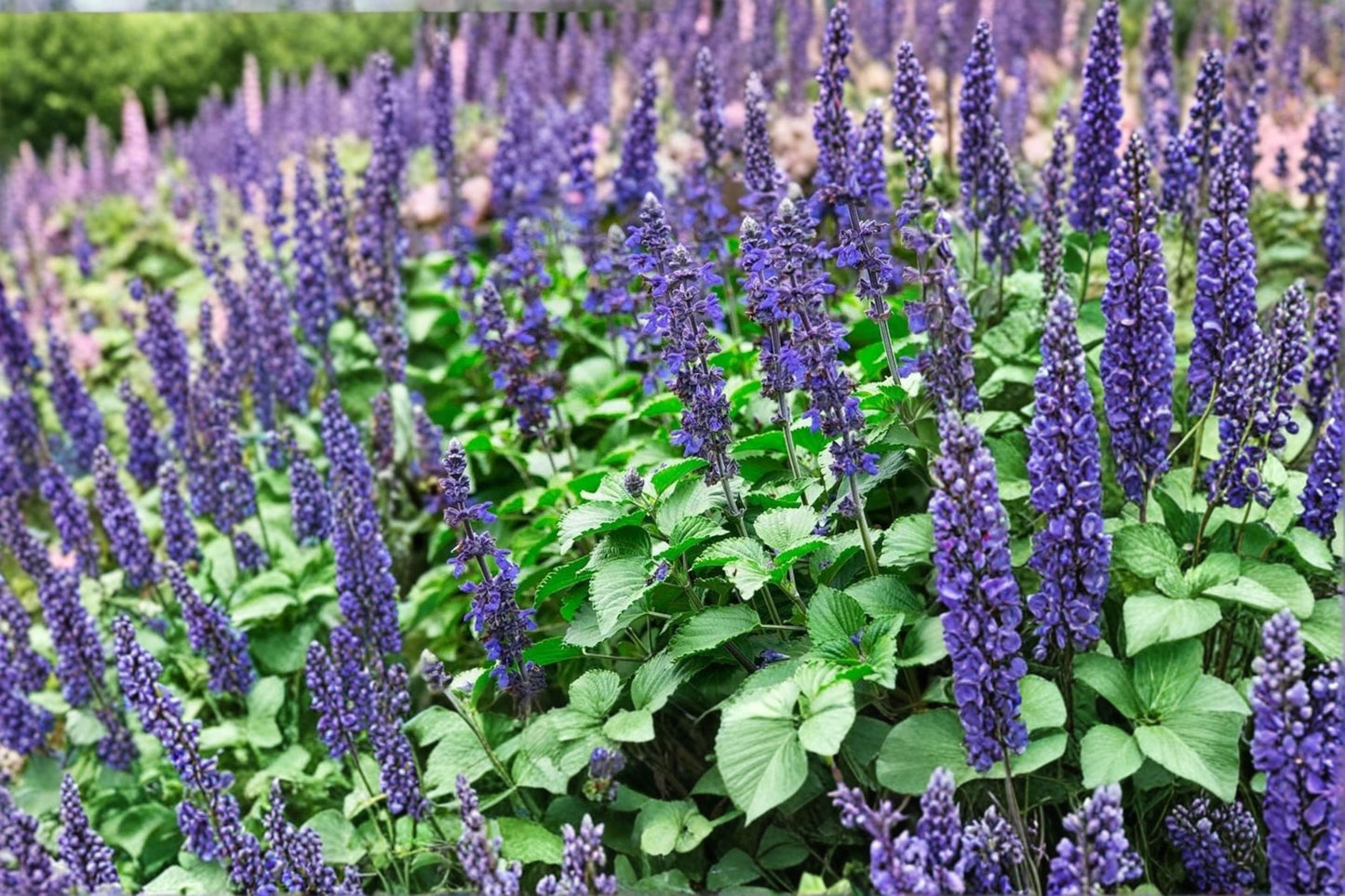
3 Blue Salvia Live Plants | Perennial Garden Sage | Pollinator Friendly | Hardy Full Sun Flowers | Easy to Grow Starter Plants
3 Blue Salvia Live Plants | Perennial Garden Sage | Pollinator Friendly | Hardy Full Sun Flowers | Easy to Grow Starter Plants
Couldn't load pickup availability
Add vibrant color and attract beneficial pollinators with 3 Live Blue Salvia Perennial Plants. Known for their brilliant blue flower spikes and long blooming season, Blue Salvia is a garden favorite that provides continuous color from late spring through summer.
This easy-to-grow perennial attracts butterflies, bees, and hummingbirds while its fragrant foliage naturally resists deer and rabbits. Perfect for sunny borders, cottage gardens, pollinator landscapes, containers, and cut flower gardens, Blue Salvia is a reliable, low-maintenance perennial that returns bigger each year.
Key Features
- Botanical Name: Salvia nemorosa
- Common Name: Blue Salvia, Perennial Garden Sage
- Plant Type: Herbaceous Perennial
- Quantity: 3 Live Plants
- Flower Color: Violet Blue
- Foliage Color: Deep Green
- Mature Height: 18–24 inches
- Spread: 12–18 inches
- Bloom Season: Late Spring through Summer
- Growth Habit: Upright, Clump Forming
- Light Requirements: Full Sun
- Water Needs: Moderate; drought tolerant once established
- USDA Hardiness Zones: 3–9
- Characteristics: Pollinator Friendly, Deer Resistant, Rabbit Resistant, Fragrant, Low Maintenance
Why You'll Love It
- Vibrant blue flower spikes
- Attracts butterflies, bees, and hummingbirds
- Long blooming season
- Fragrant foliage
- Deer and rabbit resistant
- Drought tolerant once established
- Excellent cut flowers
- Easy to grow
Perfect For
- Pollinator gardens
- Butterfly gardens
- Hummingbird gardens
- Cottage gardens
- Perennial borders
- Sunny landscape beds
- Container gardens
- Cut flower gardens
Care Instructions
Plant in full sun in well-drained soil. Water regularly during establishment, then only during prolonged dry periods. Remove spent flower spikes to encourage repeat blooming throughout the season. Cut plants back in late fall or early spring before new growth appears.
Share