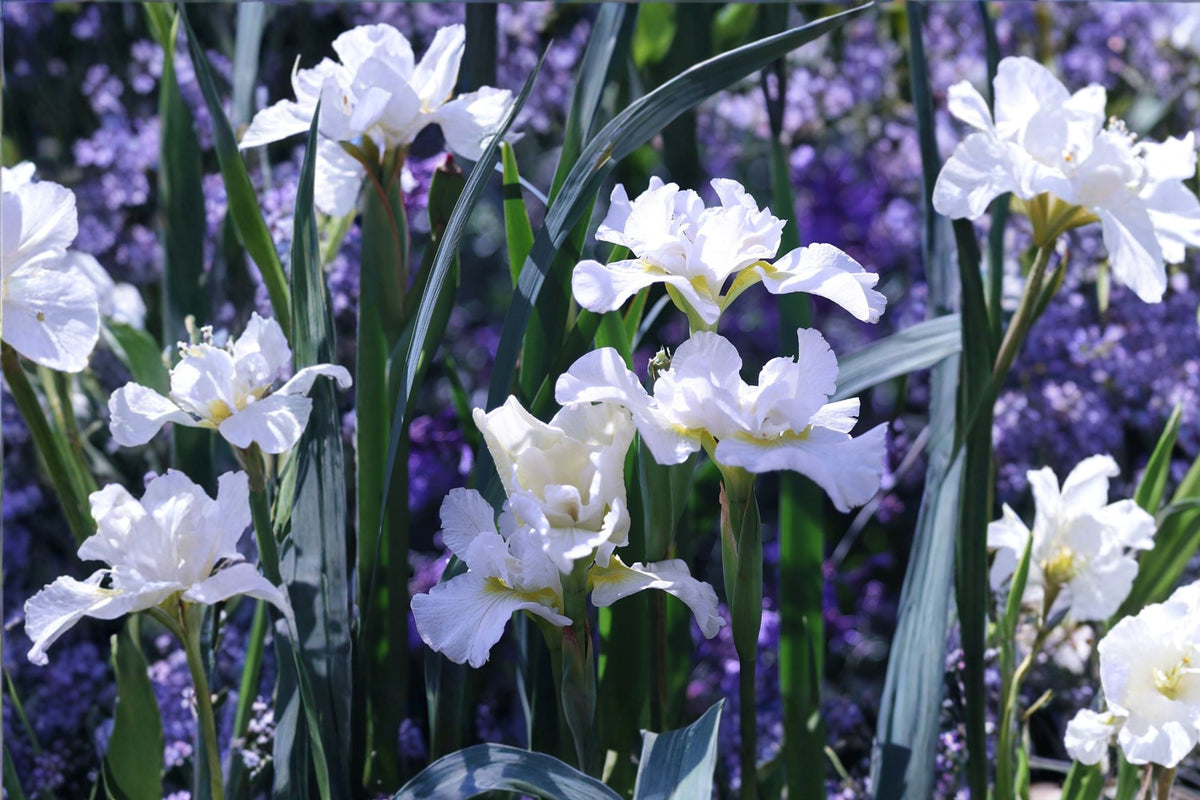
2 White Siberian Iris – Live Bare Root Rhizome Starter Plants | Spring Blooming Perennial | Water-Loving Flower | Cottage Garden & Landscape Plant
2 White Siberian Iris – Live Bare Root Rhizome Starter Plants | Spring Blooming Perennial | Water-Loving Flower | Cottage Garden & Landscape Plant
Couldn't load pickup availability
Add elegant spring color and graceful foliage to your garden with this set of 2 live White Siberian Iris bare root rhizome starter plants. Siberian Iris is a hardy perennial known for its beautiful seasonal flowers, slender green foliage, and reliable garden performance. These water-loving plants are an excellent choice for cottage gardens, perennial borders, rain gardens, pond edges, and other moist landscape areas. The foliage remains attractive throughout the growing season until frost, while established plants typically reach approximately 24 inches tall. Your plants will be freshly dug and shipped bare root with the rhizomes carefully wrapped to help retain moisture during transit.
You will receive:
✔️ 2 live White Siberian Iris bare root plants
✔️ Freshly dug rhizome starter plants
✔️ Roots wrapped with damp material for shipping
✔️ Hardy spring-blooming perennials
✔️ Secure packaging for safe arrival
🌼 Growing Information
Common Name: White Siberian Iris
Botanical Name: Iris sibirica
Plant Type: Herbaceous flowering perennial
Growth Stage: Bare root rhizome starter plants
Sun Requirements: Full sun to partial shade
Soil: Moist, fertile, well-draining soil
Watering: Regular; prefers consistently moist soil
Mature Height: Approximately 24 inches
Growth Habit: Upright, clump-forming
Bloom Season: Spring to early summer
USDA Zones: 3–8
Container Friendly: Yes
💡 Care Tip: Plant your White Siberian Iris rhizomes soon after arrival in moist, fertile soil and water thoroughly to help the roots establish. Choose a location that receives full sun to partial shade and maintains consistent moisture. Avoid allowing newly planted rhizomes to dry out completely. The foliage may naturally die back after frost and return with fresh growth during the following growing season.
Share